The birth of a King and the 4-2-4 revolution: Five stories from FIFA World Cup 1958
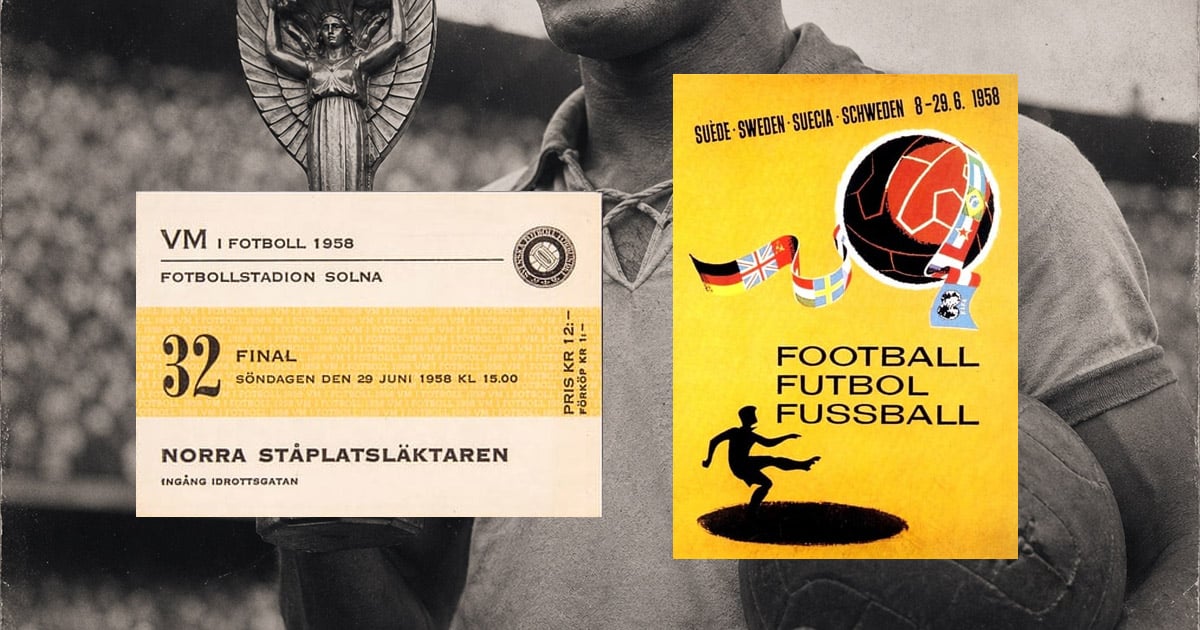
In the summer of 1958, the World Cup arrived in Scandinavia for the first time, proving to be far more than just another tournament. Sweden became the meeting point for several eras: the old European tactical school, post-war pragmatism, Brazilian flair, and the birth of a global icon.
It was here that the world truly discovered Pelé, marvelled at Brazil’s tactical revolution, and witnessed a goalscoring record that remains untouched to this day.
1. Pelé: The moment football found its King
Brazil arrived in Sweden with a 17-year-old forward largely unknown outside of South America. They left with a global superstar.
Pelé missed the start of the tournament through injury but returned to dominate the knockout stage. His solitary strike sank Wales in the quarter-finals, followed by a stunning hat-trick against France in the semis. In the final against the hosts, he netted twice—including his legendary effort where he lofted the ball over a defender before volleying home.
This was the birth of the first global football phenomenon of the television age. Decades before Maradona, Ronaldo, or Messi, the blueprint for the modern superstar was written in Stockholm.
2. Science vs. Intuition: The verdict of Professor Carvalhaes
Pelé’s journey almost took a very different path. The Brazilian delegation was the first to employ a professional psychologist, Professor João Carvalhaes. Following a series of psychometric tests, his report labelled the 17-year-old Pelé as "obviously infantile" and Garrincha as a player with an intelligence level below the threshold required to grasp complex tactics.
Fortunately, coach Vicente Feola stood his ground, famously telling the psychologist: "You may be right, Professor, but you know nothing about football." History, as we know, vindicated the manager.
3. Brazil’s 4-2-4: The blueprint for the future
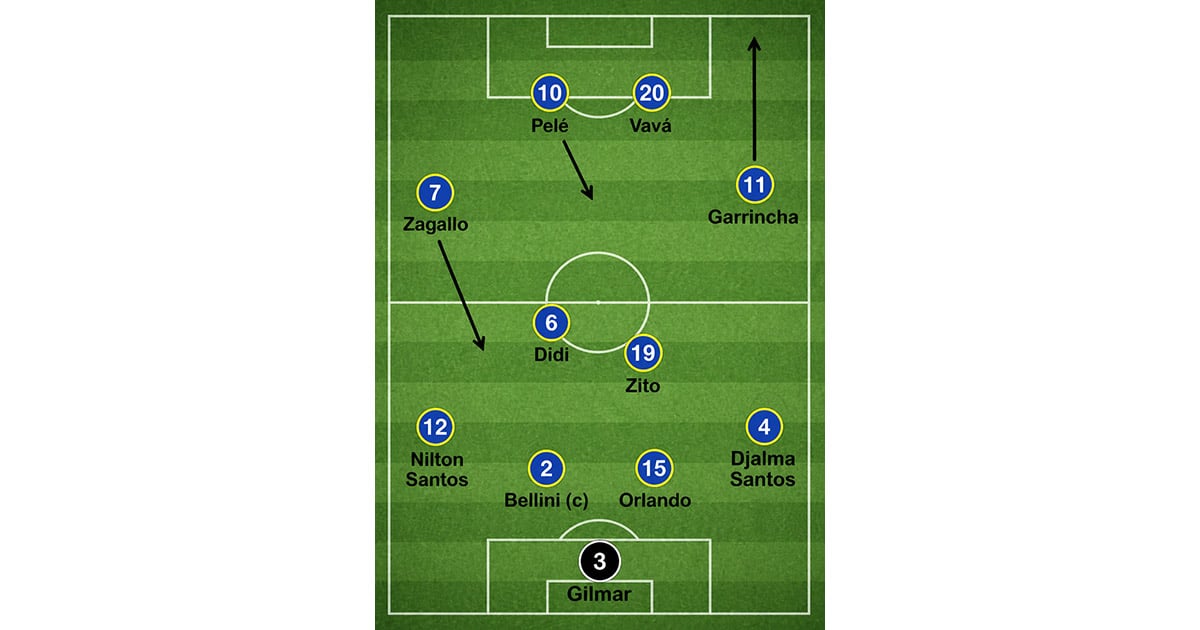
Brazil introduced a tactically refined 4-2-4 system in Sweden, a direct response to the physical athleticism of European sides. The key innovation lay in the role of Mário Zagallo. While listed as a left-winger, he acted as the game’s first "shuttler," dropping into midfield whenever possession was lost to transform the shape into a 4-3-3.
This tactical flexibility created a defensive safety net that thwarted opponents accustomed to the static "WM" formation. Brazil proved that football could be free-flowing without being chaotic—beautiful, yet ruthlessly organised.
4. Tragedy and Whiskey
1958 remains the only time all four British home nations qualified for the same World Cup. However, England played under the shadow of the Munich Air Disaster, which had claimed several Manchester United stars earlier that year. The loss of Duncan Edwards and Tommy Taylor deprived the squad of its core, leaving the Three Lions unable to recover emotionally or tactically.
While the favourites struggled, Northern Ireland produced a miracle. In a play-off against Czechoslovakia, goalkeeper Norman Uprichard badly damaged his ankle. With substitutions forbidden, the Northern Irish manager reportedly poured two bottles of whiskey over the keeper's leg at half-time to dull the pain. Despite later suffering a broken hand in the same match, Uprichard played on to help his side reach the quarter-finals—still their greatest-ever World Cup finish.
5. A record in borrowed boots and the waxed Top Star
Sweden '58 was a showcase for technical innovation, featuring Adidas boots with screw-in studs and the first live international broadcasts. The official match ball, the Top Star, was chosen from 102 candidates in a blind test. Its leather panels were treated with a special wax to ensure it didn't gain weight in the wet Scandinavian weather.
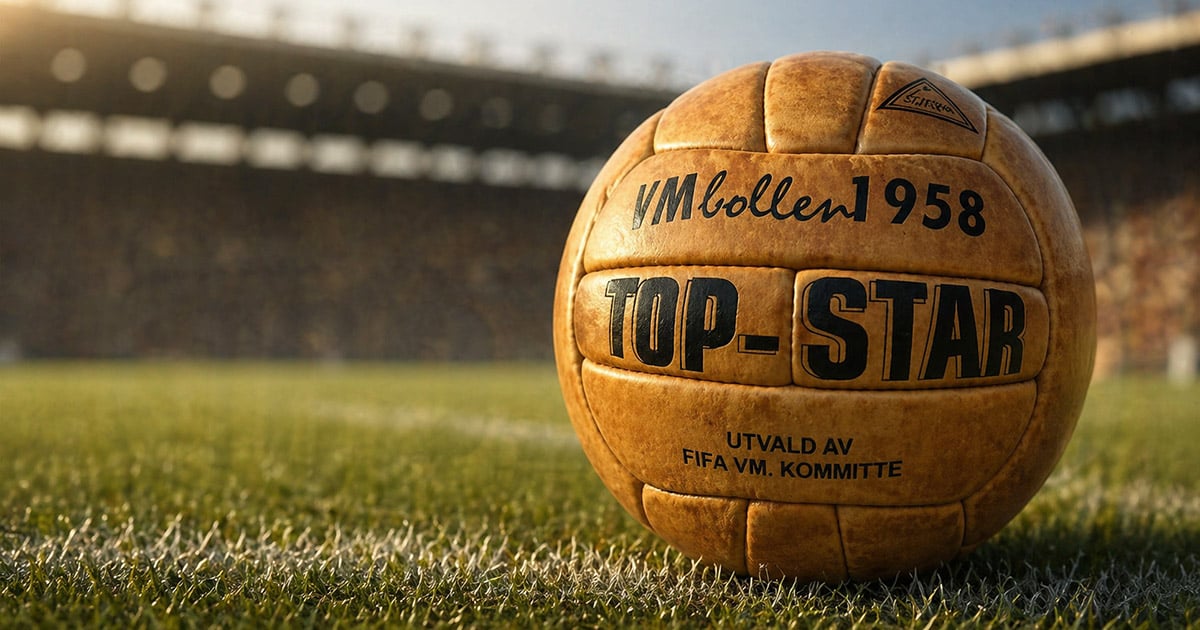
It was with this ball that France’s Just Fontaine set an eternal record of 13 goals in a single tournament. Remarkably, Fontaine achieved this in borrowed boots belonging to teammate Stéphane Bruey, after his own pair had torn during training. While modern 48-team formats and lopsided scorelines occasionally threaten this milestone, Fontaine’s feat remains the ultimate benchmark of World Cup efficiency.
In 1958, the world had only seen the first of Pelé’s three triumphs. For a match-by-match breakdown of how Brazil conquered the world, visit our dedicated 1958 FIFA World Cup archive page.

