FIFA World Cup 1938: When football collided with history
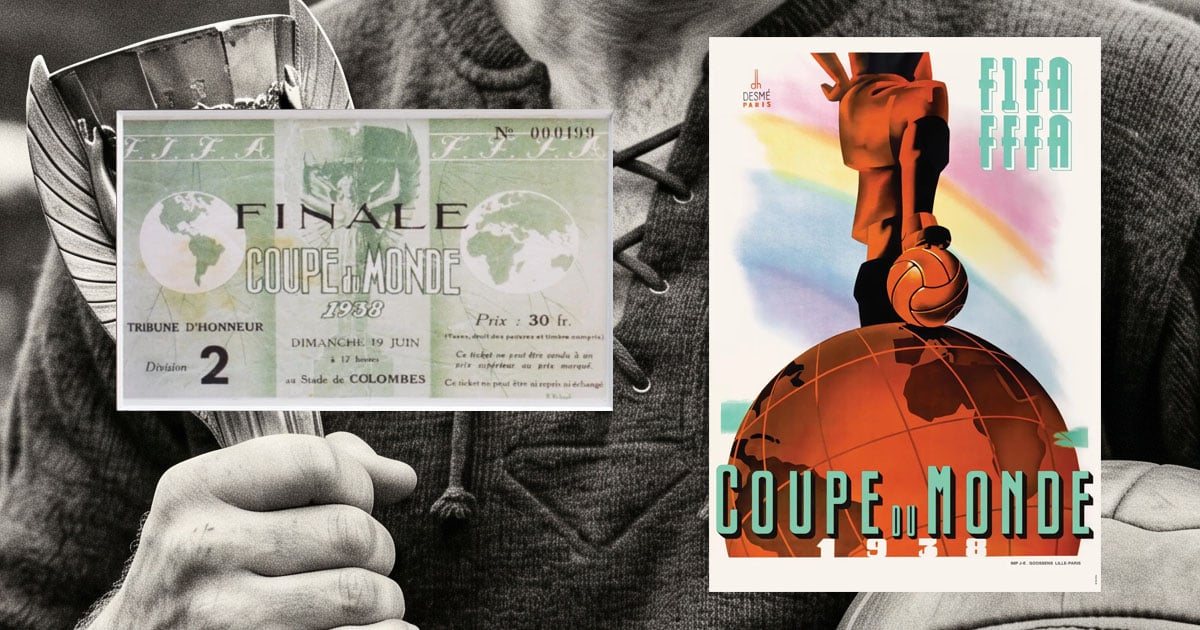
The third edition of the FIFA World Cup, hosted by France, served as the final chapter of pre-war football. Against the backdrop of an impending global catastrophe, the 1938 tournament captured unique tactical and ethical tensions that today remain fascinating historical curiosities.
Terrikon.com takes a look back at the final tournament of a golden era before the world changed forever.
1. The disappearance of the 'Wunderteam' and a legal void
The heaviest blow to the sporting integrity of the tournament was the Anschluss of Austria. One of the strongest sides of the decade, the Austrian "Wunderteam," ceased to exist just three months before kick-off. FIFA faced a legal stalemate: there was a place in the bracket, but no team to fill it. After England once again declined to participate, the draw remained unchanged, granting Sweden a walkover into the quarter-finals.
The Austrian talisman, Matthias Sindelar—ranked the 13th best European player of the 20th century by the IFFHS—categorically refused to play for the unified German team, citing his age and the state of his knees. His death less than a year later under mysterious circumstances remains one of football's darkest enduring mysteries.
2. A diplomatic challenge in black shirts
The quarter-final between Italy and France at the Stade Olympique de Colombes went down in history for more than just the visitors' tactical superiority. Vittorio Pozzo received a direct order from Rome: for the match against the hosts, the team was to abandon their traditional white change strip and wear all-black shirts—the symbol of the Fascist regime. This was a deliberate provocation against the French public and the numerous anti-fascist Italian emigrants in attendance. The deafening whistles during the fascist salute provided the tournament's most hostile atmosphere, but Silvio Piola silenced the crowd with two decisive goals.
3. Regulation and the mud of Strasbourg
Brazil vs Poland. Torrential rain. The pitch transformed into a swamp where the ball simply refused to roll. During one attack, Brazilian legend Leônidas saw his boot become firmly stuck in the thick mud. Undeterred, the striker sprinted past the defenders and hammered the ball into the net wearing only a sock. The referee glanced at the Brazilian's bare foot, looked at the scoreboard, and allowed the goal. In those days, officials were far less pedantic about such trifles. The match ended in a breathtaking 6-5 victory for Brazil.
#OnThisDay in 1938: Brazil saw off Czechoslovakia to reach their first ever #WorldCup semi-final 🇧🇷🏆 pic.twitter.com/RBQpIajxEN
— FIFA World Cup (@FIFAWorldCup) June 14, 2016
4. The 'Battle of Bordeaux' and the limits of endurance
The quarter-final between Brazil and Czechoslovakia once again highlighted the cruelty of the no-substitution rule. Even with broken bones, players were forced to remain on the pitch or leave their team shorthanded. Hungarian referee Pál von Hertzka lost control of a game that devolved into an unregulated rugby match. Czech keeper František Plánička finished the game with a broken collarbone, while Oldřich Nejedlý suffered a fractured leg. The pitch resembled a field hospital, and a replay was required to find a winner. Brazil eventually triumphed, largely because they had fewer seriously injured players left to field.
5. Management crisis: The Brazilian miscalculation
Brazil’s exit is a textbook example of destructive overconfidence. Ahead of their semi-final with Italy, coach Adhemar Pimenta made the fatal error of resting his top scorer, Leônidas, to save him for the final. Simultaneously, the Brazilian delegation bought up every available seat on the only flight from Marseille to Paris.
Vittorio Pozzo famously approached his counterparts, suggesting: "Why not let the plane take the winner?" Pimenta merely smirked: "We are the ones going to Paris." Pozzo recounted this exchange to his players in the dressing room, and the Italians took to the field with a point to prove. Italy marched onto the final, while the Brazilians were forced into a grueling cross-country train journey to Bordeaux for the third-place play-off.
#OnThisDay in 1979, the world said goodbye to one of the greatest Italian footballers of all time.
— FIFA Museum (@FIFAMuseum) August 21, 2018
Giuseppe Meazza won the #WorldCup twice, scoring ten goals in the process 🇮🇹🏆🏆
In this photo from our archive, he is shaking hands with Sárosi before the 1938 Final #RIP🕯️ pic.twitter.com/eFXmogttd5
Bonus: The power of 'motivation'
While Italy’s victory in the final was deserved, the losing Hungarian goalkeeper, Antal Szabó, uttered a legendary phrase after the match: "I may have conceded four goals, but I saved the lives of eleven men." Rumours had circulated that the Italians received a telegram from Rome stating: "Win or Die." While likely apocryphal, the psychological pressure was very real. The Italians played as if they were answering to a tribunal rather than a coach.
This was the final World Cup before the Great War. For twelve long years, an entire generation of footballers was denied the chance to compete for the ultimate prize. For a full statistical breakdown of the tournament in France, visit our dedicated 1938 FIFA World Cup archive page.

